.png?alt=media&token=bfcc71bf-04da-4200-badf-6c9f66c06a3c)
Save Water in Your Garden: 5 Proven Methods for India (2026)
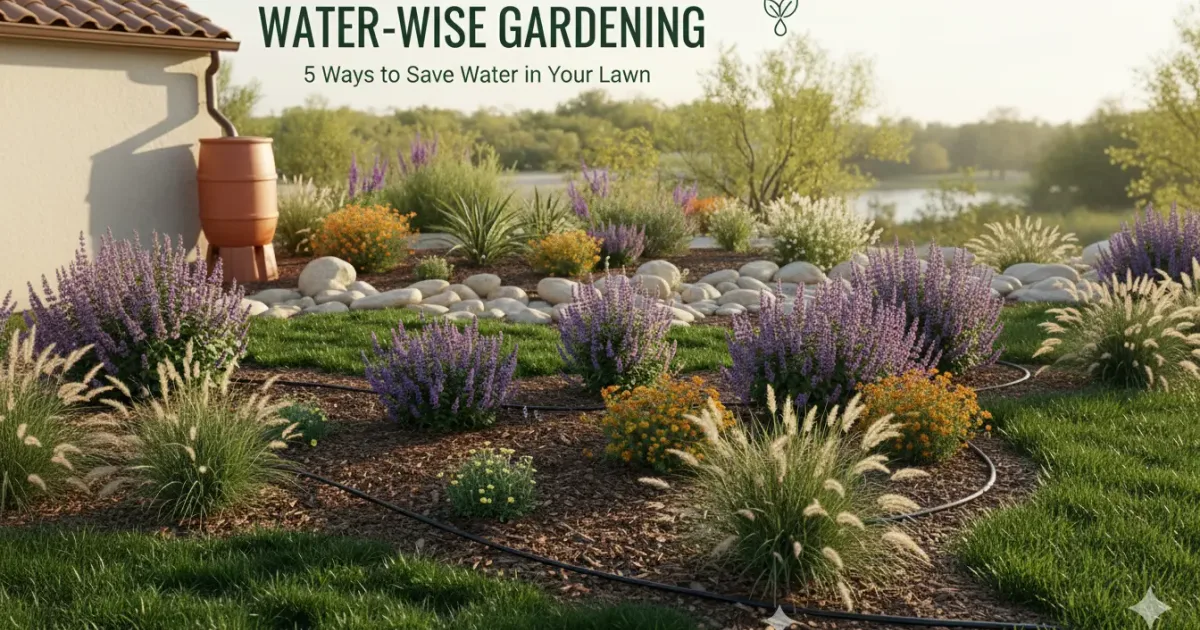
India's Water Crisis Is Real. Your Garden Can Be Part of the Solution.
India uses approximately 80% of its freshwater for agriculture and landscaping. With 21 major cities projected to face severe groundwater depletion, and extreme heatwaves pushing summer temperatures past 45°C in many regions, the way we water our gardens and lawns matters more than ever.
The good news? You can maintain a beautiful, green garden while cutting water usage by 40-70%. No expensive technology required — just smarter choices.
1. Switch to Drought-Tolerant Native Plants
This single change delivers the biggest water savings. Native and drought-tolerant plants have evolved to survive Indian conditions with minimal watering.
Best Drought-Tolerant Plants for Indian Gardens
| Plant Type | Species | Water Need | Best For |
|---|---|---|---|
| Flowering | Bougainvillea, Hibiscus, Plumeria | Low | Color, hedges |
| Ground cover | Purslane, Lantana, Ruellia | Very low | Replacing lawn grass |
| Shrubs | Curry Leaf, Tecoma, Desert Rose | Low | Structure, privacy |
| Trees | Neem, Gulmohar, Ashoka | Low (once established) | Shade, carbon absorption |
| Herbs | Tulsi, Rosemary, Lemongrass | Medium-low | Kitchen garden |
| Succulents | Aloe vera, Jade plant, Portulaca | Very low | Containers, borders |
Key principle: Group plants with similar water needs together (called hydrozoning). This prevents overwatering drought-tolerant plants and underwatering thirsty ones.
If you're replacing a conventional lawn, native ground covers like Purslane or drought-adapted ornamental grasses use 60-80% less water than traditional lawn grass (like Bermuda or Doob grass).
2. Install Drip Irrigation (DIY for Under ₹2,000)
Conventional sprinklers lose 30-50% of water to evaporation and runoff. Drip irrigation delivers water directly to roots — where it's actually needed.
Water Savings by Irrigation Method
| Method | Water Efficiency | Cost (Small Garden) | Best For |
|---|---|---|---|
| Flood/hose watering | 30-40% | Free | Nothing (wasteful) |
| Sprinkler | 50-60% | ₹1,000-3,000 | Lawns only |
| Drip irrigation | 85-95% | ₹1,500-3,000 | All plants |
| Soaker hose | 75-85% | ₹800-1,500 | Flower beds, rows |
| Olla pots (clay pot burial) | 90%+ | ₹50-100/pot | Individual plants, trees |
DIY tip: A basic drip system for a 100 sq ft garden costs ₹1,500-2,000 from any local hardware store. Components: main pipe, emitters (drippers), connectors, timer (optional). YouTube has hundreds of Indian-specific DIY guides.
Add a ₹500-800 mechanical timer to automate watering at 6 AM (minimum evaporation time). This alone prevents overwatering by 20-30%.
3. Mulch Everything (Nature's Free Water Saver)
A 5-7 cm layer of organic mulch around your plants reduces water evaporation by 25-50%. It also suppresses weeds (which steal water) and keeps soil temperature stable during India's extreme summers.
What to Use as Mulch
- Dry leaves: Free, readily available, decomposes in 3-6 months (best for flower beds)
- Coconut coir: ₹30-50/kg, excellent moisture retention, lasts 6-12 months
- Wood chips/bark: ₹50-100/kg, looks neat, lasts 1-2 years (good for pathways)
- Sugarcane bagasse: Often free from juice shops, decomposes quickly
- Newspaper (4-5 layers): Free, place under mulch layer for extra weed suppression
Important: Keep mulch 5-8 cm away from plant stems to prevent rot. Replenish every 3-4 months as it decomposes.
4. Harvest Rainwater (Free Water, Zero Bills)
India receives an average of 1,100 mm of rainfall annually. A 100 sq ft roof can collect approximately 6,800 litres during monsoon — enough to water a medium garden for 4-5 dry months.
Simple Rainwater Harvesting Setup
- Roof catchment: Your existing roof (clean it before monsoon)
- Gutters + downpipe: Direct water to storage (₹1,000-2,000 for basic PVC setup)
- First-flush diverter: Discards initial dirty rainwater (₹200-500 DIY)
- Storage tank: 500-2,000 litre tank (₹2,000-8,000 depending on size)
- Outlet with tap: Connect to drip system or use manually
Total cost: ₹4,000-12,000 for a complete DIY system. Pays for itself in one monsoon season through water bill savings. Municipal authorities in many cities offer subsidies for rainwater harvesting installations.
5. Water Smart: Timing, Depth & Frequency
How you water matters as much as how much you water. Most people water wrong — frequently and shallow. The correct approach is: infrequently and deep.
Watering Rules for Indian Gardens
- Time: Water before 7 AM or after 6 PM. Midday watering loses 40-60% to evaporation
- Depth: Soak soil 15-20 cm deep (push a stick to check). Shallow watering creates weak, surface-level roots
- Frequency: 2-3 times per week is better than daily light watering. Deep roots = drought-resistant plants
- Finger test: Push finger 5 cm into soil. If moist, don't water. If dry, water deeply
- Season adjustment: Cut watering by 50% in monsoon, increase 20% in peak summer (April-June)
Greywater reuse: Kitchen rinse water (from washing vegetables/rice) and AC condensate water are safe for plants. An average AC produces 10-20 litres/day — free irrigation during summer when you need it most.
The Carbon Connection: Why Water-Wise Gardens Matter for Climate
Water and carbon are deeply connected:
- Pumping water requires energy: India's water infrastructure is heavily electricity-dependent. Less water pumped = less coal burned = less CO₂
- Healthy soil stores carbon: Mulched, composted garden soil sequesters carbon. A well-maintained garden can store 1-2 kg CO₂ per square metre per year
- Trees planted in water-wise gardens survive: Higher survival rate = more long-term carbon absorption (see our guide on how to plant trees for carbon offset)
Use our Carbon Footprint Calculator to see how your water and energy choices impact your overall emissions. Every litre saved is electricity not consumed.
Quick-Start Checklist
Start with one action this week:
- ✅ Spread dry leaves as mulch around existing plants (free, 30 minutes)
- ✅ Move watering time to before 7 AM (instant 20-30% savings)
- ✅ Place a bucket under your AC outdoor unit (10-20 litres/day free water)
- ✅ Replace one patch of lawn grass with drought-tolerant ground cover
- ✅ Install a basic drip system for your most water-hungry plants (₹1,500)
Small changes compound. A garden that used 500 litres/week can easily drop to 150-200 litres/week with these techniques — a 60-70% reduction without sacrificing greenery.
Explore more: What are carbon credits? | India's carbon market 2026 | How HaritKosh works
Frequently Asked Questions
Related Articles

Carbon Credits for Beginners: India's Green Economy Explained
Learn what carbon credits are and how they drive India's green economy in 2026. Beginner-friendly...
Green Hydrogen India 2026: Projects, Cost & Carbon Impact
India's green hydrogen landscape in 2026: major projects, production costs, carbon reduction...
How to Plant a Tree in India: Carbon Offset Guide (2026)
Learn how to plant a tree correctly in India: best season, species selection, step-by-step guide,...